GHG Protocol publishes results of opinion gathering on AMI – 84% support multi-statement structure, moving on to Phase 2 discussions.



Board Member of the Global Sustainability Standards Board (GSSB)
Member of the GHG Protocol Expert Working Group (TWG)
Tomoo Machiba, Director of Zeroboard Research Institute
On September 23, 2026, the GHG Protocol Secretariat published the aggregated results of the Request for Public Comment (RFI) for the Phase 1 progress report white paper on "Actions and Market Instruments (AMI)," which is part of the revision work *1) . 487 responses were received for the RFI, and 437 were analyzed as valid responses. The results indicate a high level of interest in new developments of the GHG Protocol, with 84% supporting the proposed "multi-statement" type GHG reporting structure. Building upon the insights article published at the time of the RFI call (June 2026) , this article re-examines the background and mechanisms of AMI, and then, based on an interview with Hiromi Kawamata, Group Leader of the Global Environment Group, Technology and Environment Department, Iron and Steel Federation of Japan, and a member of the AMI Expert Working Group (TWG), explains the key points of the RFI results and the outlook for Phase 2.
What is AMI? – Visualizing decarbonization actions invisible in existing inventories.
The GHG Protocol is the de facto international standard for calculating and reporting companies' greenhouse gas (GHG) emission amount, and is based on a "physical inventory" consisting of Scope 1 (direct emissions from the company itself), Scope 2 (indirect emissions from purchased electricity, etc.), and Scope 3 (indirect emissions from the entire value chain). However, in recent years, contractual and market-based decarbonization measures such as green steel, biomethane certificates, SAF (sustainable aviation fuel) certificates, and virtual PPAs (power purchase agreements), as well as efforts to avoid, reduce, and eliminate emissions through investments and projects, have been rapidly expanding. The effects of these actions are not necessarily reflected in the existing Scope 1-3 inventories, and it has been pointed out that it is Issue to see how much a company is contributing to decarbonization.
To address this Issue, the GHG Protocol is developing new standards and guidance under the name "Actions and Market Instruments" (AMI) as part of its revision process. AMI is not limited to any specific sector, but covers a wide range of contractual and market-based decarbonization instruments in fields such as power, Industry(steel, chemicals, cement, etc.), transportation, and agriculture, and aims to establish quality standards and safeguards for diverse instruments.
The core proposal of AMI is a "multi-statement" type of GHG emission amount reporting structure. Instead of aggregating information into a single emission amount inventory, this framework divides and discloses information into four distinct "statements" (reporting categories), the following four categories have been proposed (Figure 1).
① Physical GHG Inventory: Existing Scope 1-3. Physical emission amount based on attribution accounting.
② Market-based GHG inventory: Reporting procurement choices, environmental attributes, and certificates based on contracts, extending the existing Scope 2 market criteria to Scope 1 and 3 as well.
③ GHG Impact Statement: This statement reports on the avoidance, reduction, and elimination of emissions resulting from "actions" such as projects, investments, and the production, sale, and purchase of products, based on consequential accounting (Figure 2). Carbon credits are also included here.
④ Non-GHG Indicator Statement: Disclosure of KPIs and other leading indicators of decarbonization that cannot be expressed in CO2 equivalents.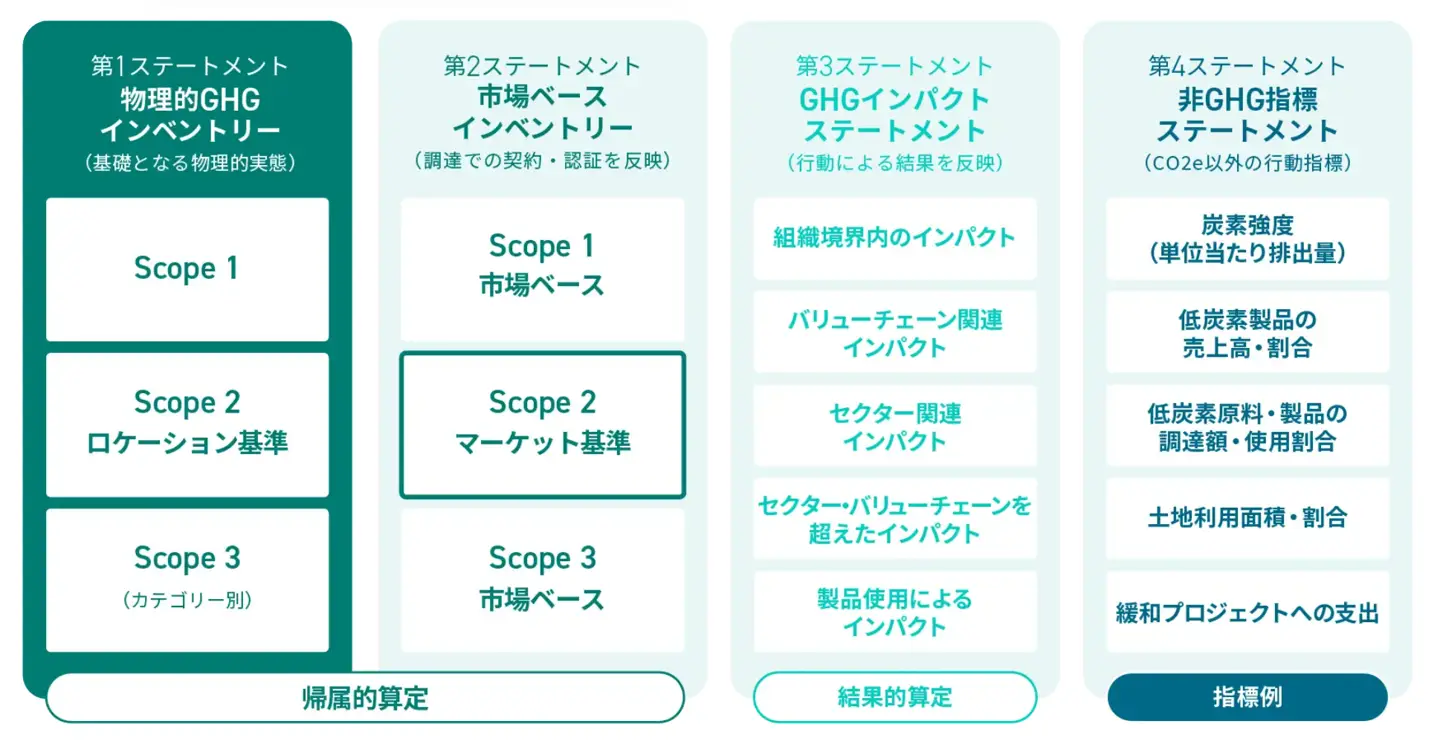 Figure 1: Four proposed GHG statements
Zeroboard Create based on AMI white paper *2)
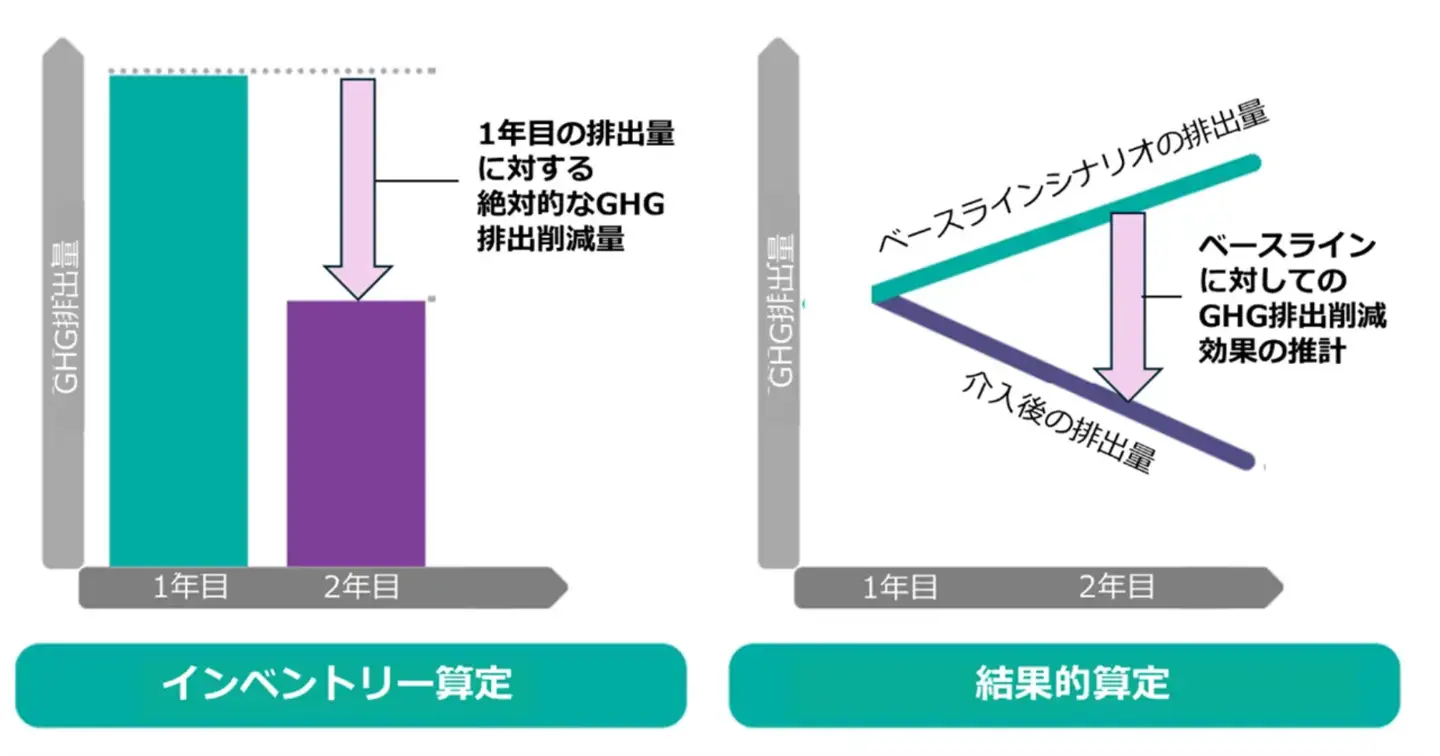 Figure 2: Differences between inventory (attributive) calculation and outcome calculation
Zeroboard Create based on GHG Protocol Land Sector and Removals Standard (p.91, Figure 16.1) *3)
RFI results published – market-based inventory receives the highest support.
The RFI was conducted from March 31 to June 15, 2026, and of the 487 responses received, 437 were considered valid and included in the analysis (the remaining 50 were excluded for reasons such as unnatural attribute information, duplication, or being for testing purposes).
Looking at the attributes of the respondents, by region, Europe accounted for 43%, North America 34%, and East Asia 12%, with developed countries making up the vast majority at 91%. By country, the US was the most numerous at 33%, followed by Japan at 10%, the UK at 10%, and France at 9%. By organizational type, "private companies/market participants" accounted for 62%, followed by "public/academic/civil society/standard-setting organizations" at 20%, and "Service providers/advisors" at 18%. 59% of the responding organizations have already Create a GHG inventory. Small and medium-sized enterprises accounted for 7% of the total valid responses (16% of private company respondents). According to Mr. Kawamata, the number of comments from Japan was the second highest by country, indicating a high level of interest on the Japanese side. The secretariat also emphasized that although there were few opinions from the Global South, there were no significant differences in the content of the opinions compared to developed countries.
84% responded with "strong support" or "support" for the proposed "multi-statement" reporting structure, and 86% responded with "strong agreement" or "agreement" for its purpose. The trend of support was generally consistent across regions, organizational sizes, and organizational types, resulting in a widespread recognition of the need for a framework to report decarbonization actions that are difficult to see with the current Scope 1-3 physical inventory.
The top benefits of the multi-statement structure cited were "ability to accurately calculate and report actions and market instruments that meet business needs" (81%), "increased transparency to stakeholders" (78%), "providing a clear calculation framework to market instrument providers" (73%), and "contribution to global climate change mitigation" (71%). On the other hand, Issue cited included "increased complexity of reporting" (68%) and "the need for additional resources" (54%), but the agreement on benefits outweighed concerns about the Issue.
Of the three additional statements proposed, the second statement, "Market-Based GHG Inventory," received the most support, with 87% of respondents saying it "should be included." This idea extends the logic of the existing Scope 2 market standard to other scopes and sectors, providing a separate reporting area for contractual procurement, environmental attributes, and certificates, distinct from the physical inventory. However, opinions were divided on whether this category should be positioned as a "parallel" reporting category on par with the physical inventory, or merely as a "complementary or secondary" one. Respondents who emphasized the latter expressed concern that separating environmental attributes by contract could weaken accountability for physical emission reduction efforts.
The third statement, the "GHG Impact Statement," also received support from 80% of respondents who believe it "should be included." While it was valued as a framework for showing consequential impacts that cannot be captured by attribution calculations, without mixing them with physical inventory, questions were raised about the maturity of the methodology, such as baseline Settings and the determination of additionality (that the reduction or removal would not have been achieved without that action). The five subcategories—"impacts within organizational boundaries," "impacts related to value chains," "impacts related to sectors," "impacts beyond value chains and sectors (global)," and "GHG impact of products sold" (reduction contribution)—all received an average of 63% support, although there were also calls for consolidation and simplification of the categories. In addition, 69% of respondents said that both positive and negative impacts should be reported in consequential calculations, and a majority opinion was that netting with physical and market-based inventory should be prohibited.
On the other hand, opinions were divided on the fourth statement, the "Non-GHG Indicators Statement," with 33% supporting it, 44% neutral or uncertain, and 25% opposing it. Opposing or cautious respondents expressed concerns that it might exceed the original role of the GHG Protocol (developing GHG calculation standards) and overlap with sustainability disclosure frameworks (IFRS S, ESRS, GRI, etc.). Even if included, 58% believe that "only general categories and principles should be shown."
Furthermore, many respondents indicated that the following conditions should be met when adopting a multi-statement structure: ① maintaining the integrity of physical inventory, ② clarifying the purpose and boundaries of each statement, and ③ establishing quality standards and safeguards to prevent double counting, double claims, misleading claims, and inappropriate offsetting. In addition, many recommended that the new statements be optional, at least for the time being, that they be aligned with existing standards and systems (such as ISO, SBTi, IFRS S, ESRS, GRI, CDPs, RED/ISCC sustainability standards, etc.), and that feasibility be ensured through pilot tests and the provision of case studies and decision trees. There were also many opinions calling for phased implementation, simplified reporting routes, and the provision of default coefficients, showing consideration for small and medium-sized enterprises and businesses in the Global South.
 Hiromi Kawamata (right), a member of AMI TWG, responds to the author's online interview.
Phase 2 Development – Points for Future Discussion
Based on the results of the above RFI, the GHG Protocol Secretariat has indicated its intention to: ① continue to make physical inventory an essential foundation; ② clarify the positioning and interrelationships of each statement; ③ advance the concretization of quality standards and safeguards for market instruments, including double counting prevention and monitoring, reporting, and verification (MRV); ④ develop guidance to support practical application (decision trees, case studies, sector-specific guidance, etc.); and ⑤ continue to align with related initiatives such as ISO, SBTi, ISEAL Alliance *4) , AIM Platform *5) , and TCAT *6) .
In Phase 2, the Secretariat will draft the requirements for AMI by November in accordance with this policy, the TWG will then finalize the details based on that, and it is expected that the protocol will be submitted for review by the Independent Standards Board (ISB) in January 2027. Kawamata said, "The second and third statements are moving in the direction of improving convenience for companies, but for the time being they will be positioned as optional reporting categories. Regarding the non-GHG indicators in the fourth statement, he predicted that "there is a lot of opinion in the TWG that they should be given a lower priority." As for quality standards and safeguards, he said, "There is not enough time to discuss them from scratch, so it is likely that carbon credits will be based on existing frameworks such as the ICVCM *7) Core Carbon Principles (CCP) and reduction contributions on the WBCSD Reduction Contribution Guidance v2.0 *8) ."
Furthermore, the treatment of Scope 2 market standards included in the current protocol has not been discussed by the AMI TWG as it is outside its scope. Whether to include them in the first statement or separate them and include them only in the second statement will be considered after the secretariat's proposal is presented.
The AMI requirements will ultimately be integrated with the calculation and reporting standards for Scope 1-3 and become the "Corporate Standards, Third Edition," co-branded with ISO. The draft of this standard is scheduled to be put up for public consultation in the second quarter of 2027.
In particular, the procurement of renewable energy and other resources on a market basis, such as virtual PPAs and various certificates, as well as the calculation and disclosure of carbon credits and reduction contributions, are practically important issues for Japanese companies. It will be necessary to continue to closely monitor the revision trends of the GHG Protocol in order to explain these efforts externally without undermining the credibility of existing Scope 1-3 inventories.
*1) Greenhouse Gas Protocol, Actions and Market Instruments – Phase 1 Progress Update White Paper: Request for Information, Summary of Responses, September 2026. https://ghgprotocol.org/sites/default/files/2026-09/AMI-Request-for-Information-Summary-of-Responses.pdf
*2) GHG Protocol, Actions and Market Instruments: Phase 1 Progress Update White Paper, Version 3 – Request for Information, March 2026. https://ghgprotocol.org/sites/default/files/2026-03/AMI-Phase1-WhitePaper-RFI.pdf
*3) World Resources Institute (WRI) and World Business Council for Sustainable Development (WBCSD), Greenhouse Gas Protocol Land Sector and Removals Standard Version 1.1: Agriculture and CO2 removal technologies, Supplement to the GHG Protocol Corporate Standard and Scope 3 Standard, 30 June 2026. https://ghgprotocol.org/land-sector-and-removals-standard
*4) International Social and Environmental Accreditation and Labelling Alliance: An international alliance comprised of over 60 standards Settings and certification bodies, including the Forest Stewardship Council (FSC), the Marine Stewardship Council (MSC), and the Rainforest Alliance. It works to improve the reliability of sustainability certification systems by developing "reliability principles" and codes of best practices. https://www.isealalliance.org
*5) Advanced and Indirect Mitigation Platform: An organization jointly operated by Gold Standard, Center for Green Market Activation (GMA), and Center for Climate and Energy Solutions (C2ES). It develops standards and guidance to enable companies to calculate and report decarbonization investments (indirect emission reductions) along their value chains, and published its first edition in April 2026. https://aimplatform.org
*6) Task Force for Corporate Action Transparency: An initiative involving experts in GHG calculations and NGOs. In September 2025, it published the Mitigation Action Accounting and Reporting Guidance (MAARG) and the Target Accounting and Reporting Guidance (TARG). https://www.tcataction.org
*7) Integrity Council for the Voluntary Carbon Market: An international organization that sets standards for high-quality carbon credits in the voluntary carbon market. It has developed the Core Carbon Principles (CCPs), consisting of 10 principles across three areas: governance, emissions impacts, and sustainable development, and affixes certification labels to credits that meet the requirements. https://icvcm.org/core-carbon-principles
*8) WBCSD, Guidance on Avoided Emissions v2.0: Drive innovations and scale solutions toward net zero, July 2025. https://www.wbcsd.org/resources/guidance-on-avoided-emissions-helping-business-drive-innovations-and-scale-solutions-toward-net-zero

Related articles
-

Nature-related standards moved ahead of COP17 – "Measure," "Evaluate," "Set Goals," "Disclose," and "Monetize Funds" in a single circuit.
-

[SSBJ Disclosure] Practical Guide to Third-Party Assurance | A 4-Step Roadmap and Key Points of Internal Control Explained by Assurance Institutions
-
GHG Protocol publishes results of opinion gathering on AMI – 84% support multi-statement structure, moving on to Phase 2 discussions.
-
Sustainability Disclosure in Asia and Oceania: ISSB Adoption Progresses, but Emerging Countries are More Impact-Oriented
Ongoing Webinars
-
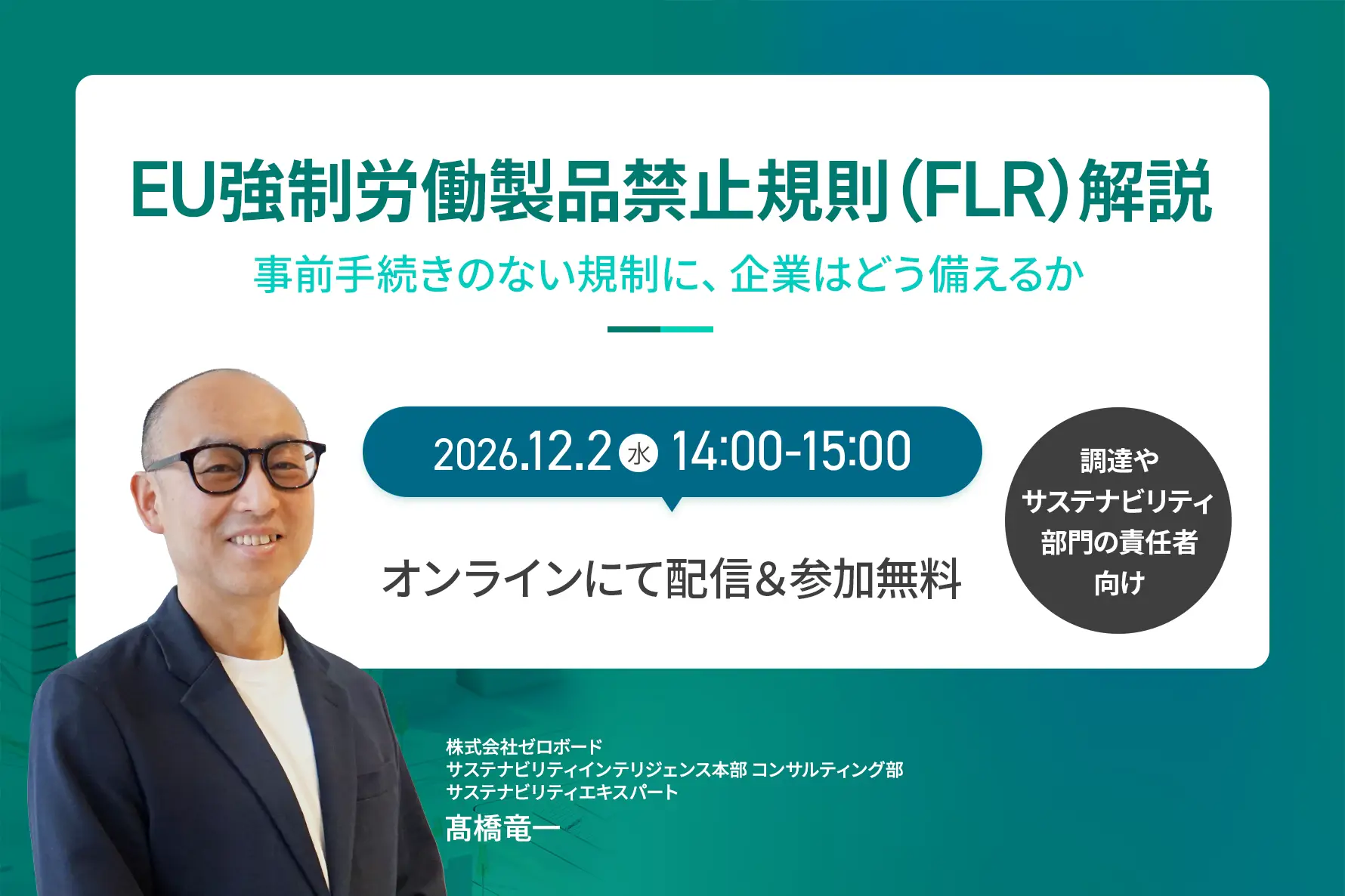
Explanation of the EU's Regulation on Products Removing Forced Labor (FLR): How Can Companies Prepare for Regulations Without Prior Procedures?
Location: Online (Zoom)Participation fee: Free -
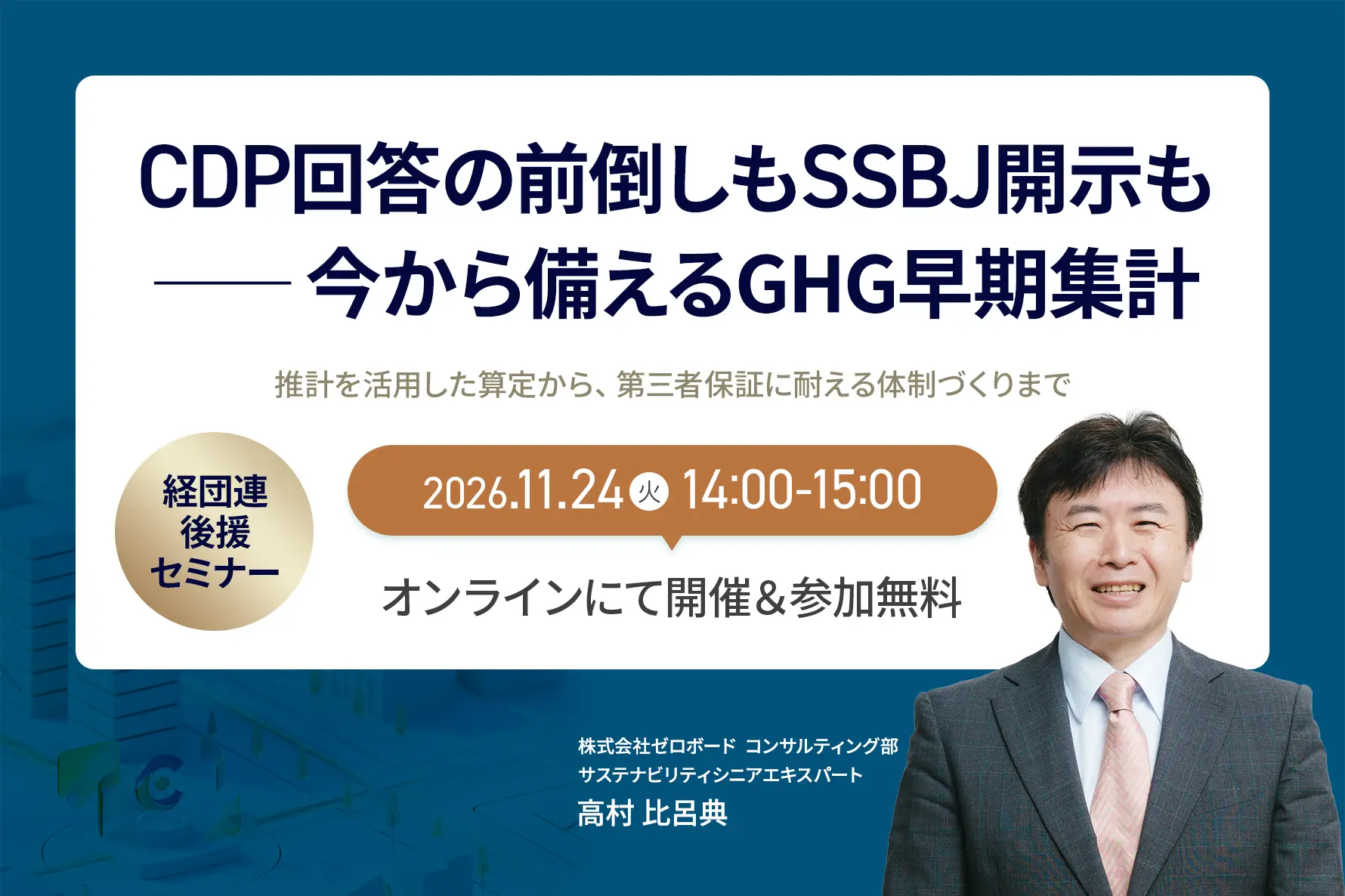
[Sponsored by Keidanren] Early CDPs responses and SSBJ disclosures—Prepare now for early GHG counting
Location: Online (Zoom)Participation fee: Free -
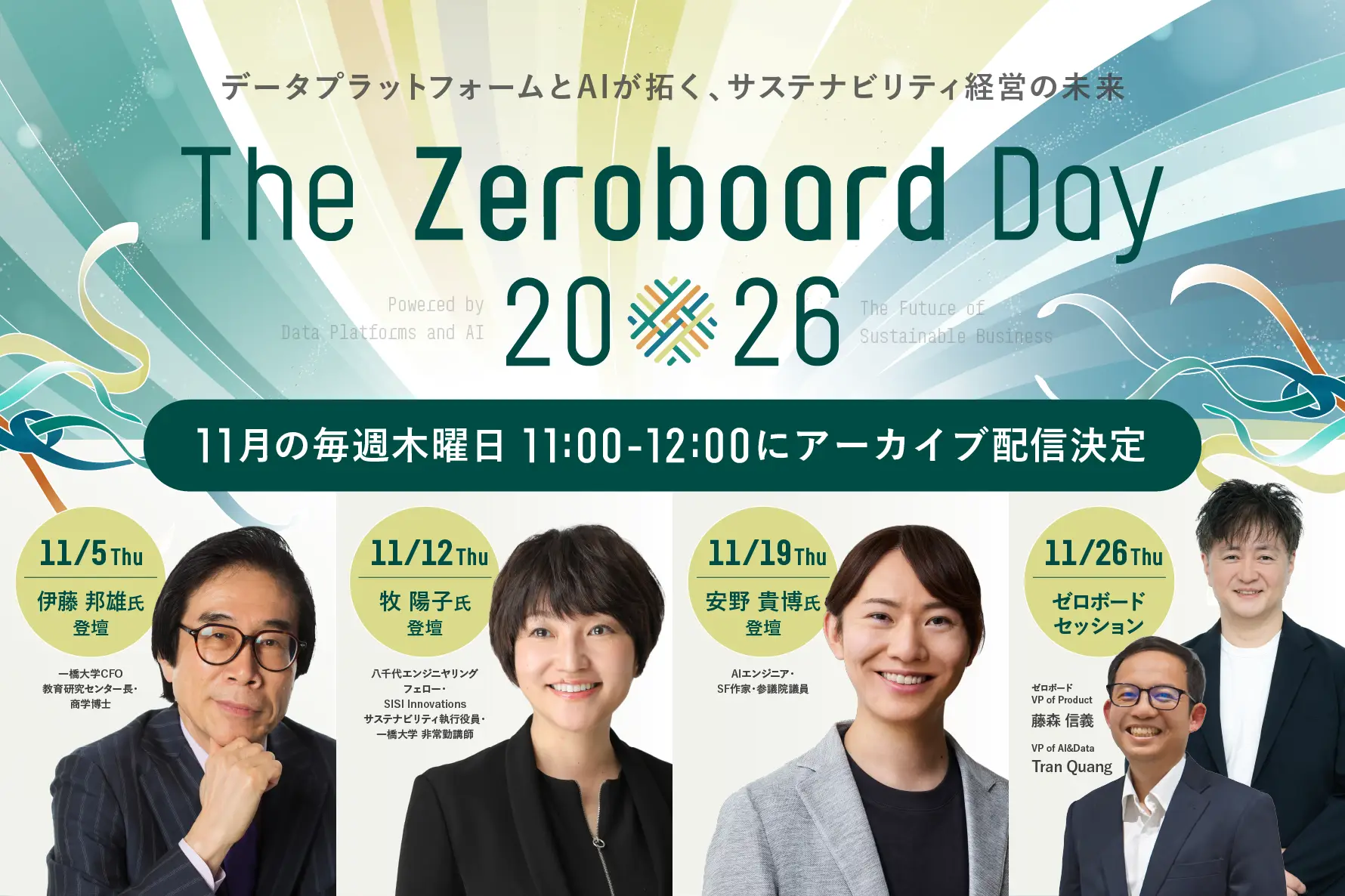
<Recorded broadcast: Every Thursday in November, 11:00 AM - 12:00 PM each (4 episodes in total)>
The Zeroboard Day 2026 – The Future of Sustainability Management, Unleashed by Data Platforms and AI –Location: Online (Zoom)Participation fee: Free -
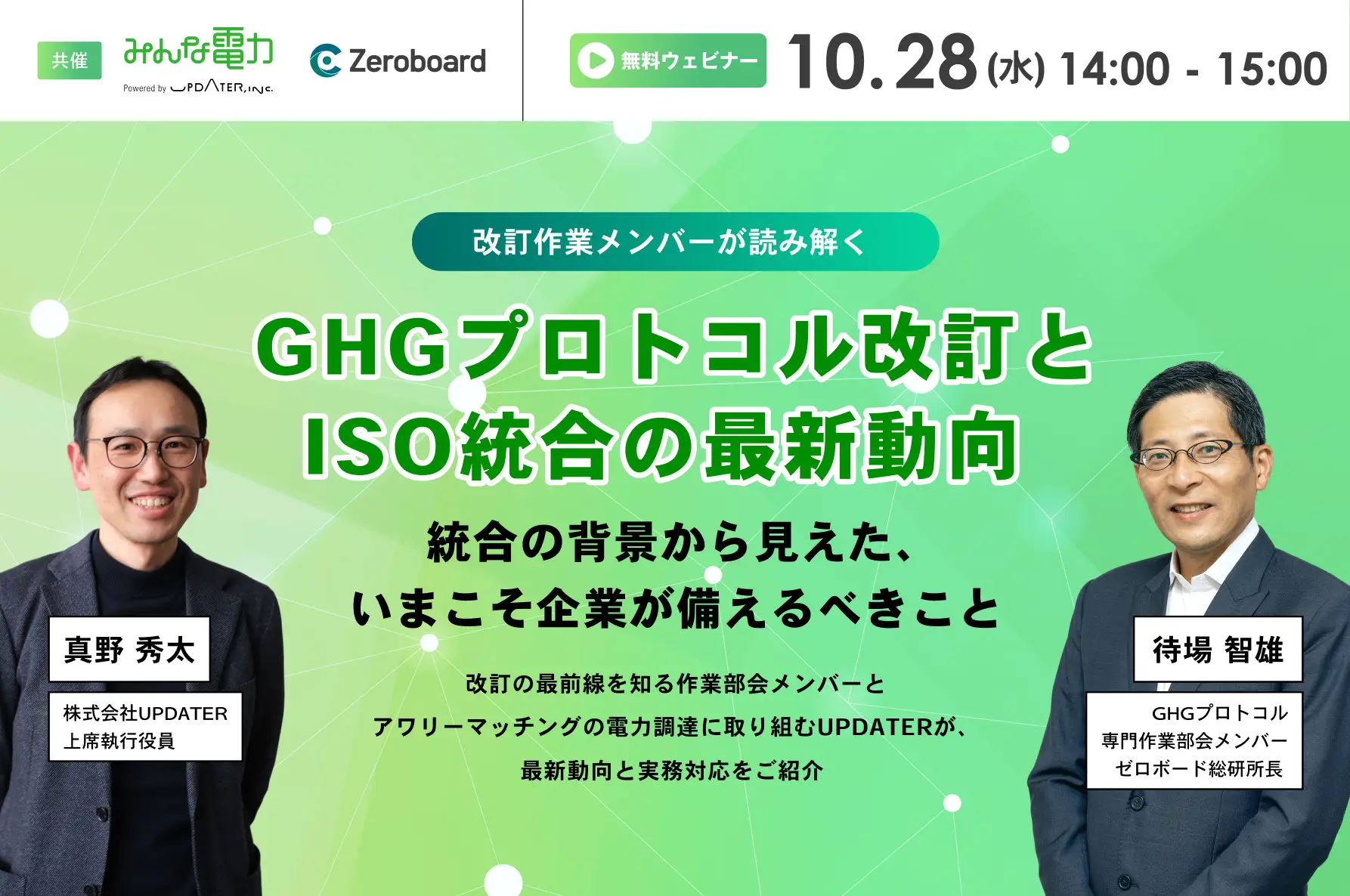
[UPDATER Co-sponsored] Latest Trends in GHG Protocol Revision and ISO Integration: What Companies Should Prepare Now, as Seen from the Background of Integration
Location: Online (Zoom)Participation fee: Free



-
Nature-related standards moved ahead of COP17 – "Measure," "Evaluate," "Set Goals," "Disclose," and "Monetize Funds" in a single circuit.
-
[SSBJ Disclosure] Practical Guide to Third-Party Assurance | A 4-Step Roadmap and Key Points of Internal Control Explained by Assurance Institutions
-
GHG Protocol publishes results of opinion gathering on AMI – 84% support multi-statement structure, moving on to Phase 2 discussions.
-
Sustainability Disclosure in Asia and Oceania: ISSB Adoption Progresses, but Emerging Countries are More Impact-Oriented
-

Deciphering the ESRS-40a (formerly N ESRS) exposure draft: Limitations on impact and value chain voluntary standards (Public comments accepted until October 31)